
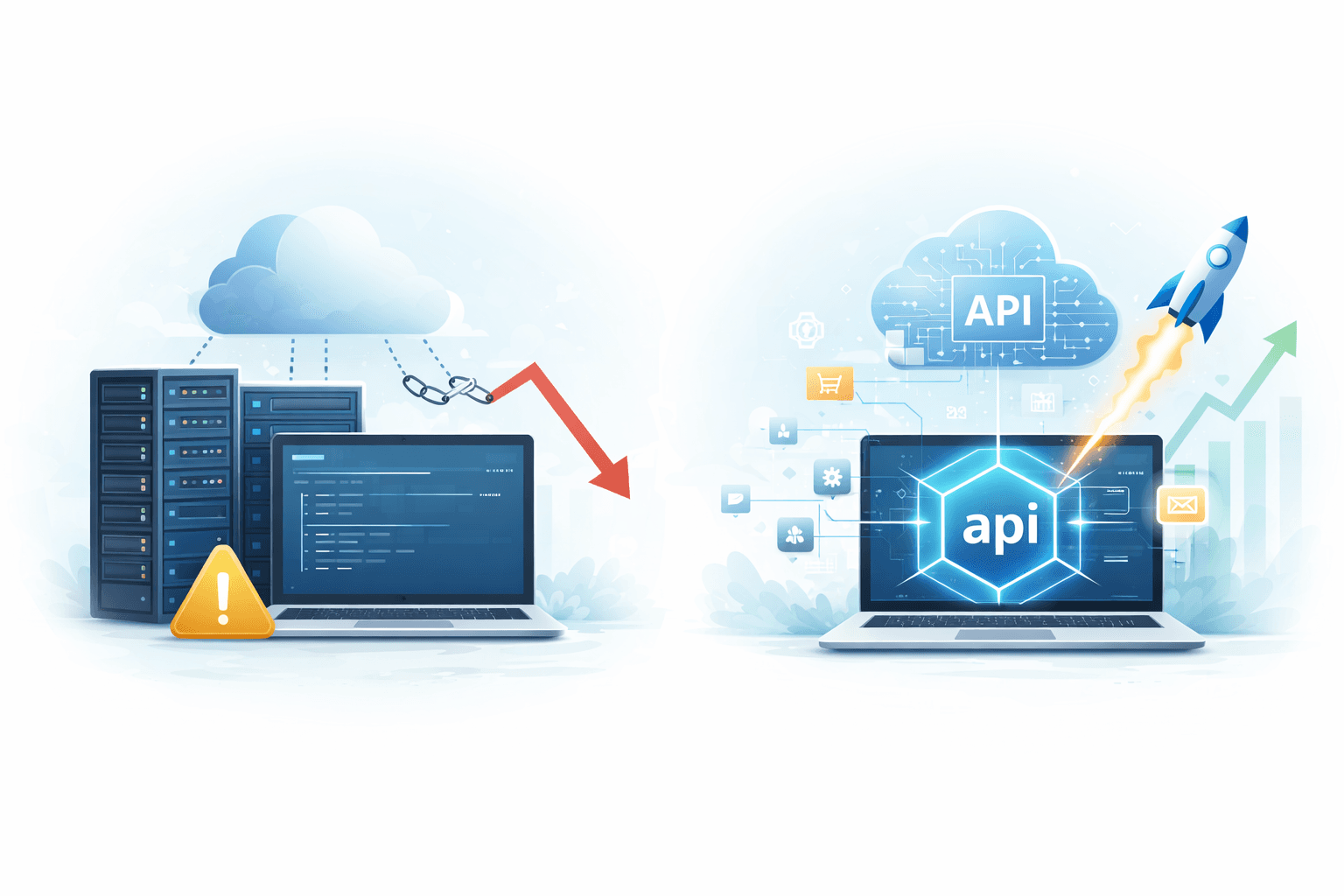
How Poor Backend Systems Are Silently Killing Business Growth — And How Modern APIs Solve the Problem

Software Engineer
In today’s digital-first world, businesses invest heavily in marketing, branding, and user interface design. However, many still overlook one critical foundation that directly affects customer experience and revenue: the backend system. Customers may never see your backend, but they feel its impact every time a website loads slowly, a payment fails, or an app crashes at a crucial moment. These technical issues are often misunderstood as “IT problems,” but in reality, they are business problems with direct financial consequences. As digital expectations continue to rise, backend performance is no longer optional. This article explains how poor backend systems quietly hurt business growth and how modern, API-driven architectures help companies scale reliably and sustainably.
Why Backend Performance Matters More Than Ever
Businesses today operate in an environment where customers expect speed, reliability, and seamless digital experiences. Competition is just one click away, and patience is limited.
Backend inefficiencies create problems such as:
- Slow website or application response times
- Failed or delayed transactions
- Data inconsistencies across platforms
- Limited scalability during high traffic
- Increased dependency on manual processes
When these issues occur repeatedly, customers lose trust, support teams get overwhelmed, and revenue leaks begin to appear — often without the business realizing the real cause.
Backend Failures Are Business Failures
A weak backend affects more than just technical teams. It impacts every department.
Common business consequences include:
- Lost sales due to checkout or payment failures
- Poor customer retention caused by unreliable systems
- Higher operational costs from manual interventions
- Inability to scale during peak demand or campaigns
- Damage to brand reputation and customer confidence
In many cases, businesses invest more money in marketing to fix declining performance, when the real issue lies deeper in the system architecture.
The Shift Toward API-Driven Systems
Modern businesses are solving backend challenges by adopting API-driven architectures.
An API (Application Programming Interface) enables different systems to communicate with each other in a secure, efficient, and structured way. Instead of building tightly connected systems that are difficult to maintain, APIs allow businesses to create flexible, modular platforms that can grow over time.
This shift has transformed how digital products are built and scaled.
How Modern APIs Solve Core Business Problems
1. Faster and More Reliable Performance
Well-designed APIs reduce response times and handle requests efficiently. Faster systems lead to smoother customer experiences, higher engagement, and better conversion rates.
2. Seamless System Integration
APIs connect websites, mobile apps, CRMs, payment gateways, analytics tools, and third-party services into one unified ecosystem. This eliminates data silos and ensures consistent information across platforms.
3. Scalability Without Disruption
API-based systems are designed to handle traffic spikes without crashing. Whether it’s a festive sale, marketing campaign, or sudden growth, businesses can scale without rebuilding their infrastructure.
4. Automation of Business Processes
APIs enable automation by allowing systems to exchange data without manual effort. This reduces errors, saves time, and lowers operational costs.
5. Improved Security and Control
Modern APIs use authentication, authorization, and access control to protect sensitive data. Businesses can define who can access what, reducing security risks while maintaining flexibility.
Why Backend Architecture Is Now a Growth Strategy
Backend systems are no longer just support infrastructure. They directly influence how fast a business can innovate and respond to market changes.
A strong backend allows businesses to:
- Launch new features quickly
- Integrate new tools or partners easily
- Analyze real-time data for better decisions
- Maintain consistent customer experiences across channels
- Reduce long-term technical debt
Companies that invest early in scalable backend systems are better prepared for growth than those relying on quick fixes and outdated architectures.
Common Signs Your Backend Needs Improvement
Many businesses don’t realize they have backend issues until growth slows. Some warning signs include:
-
Frequent system downtime or performance complaints
-
Difficulty adding new features or integrations
-
Manual data handling between systems
-
High dependency on a few technical resources
-
Increasing maintenance costs over time
These signs indicate that the backend is limiting business potential rather than supporting it.
Best Practices for Building a Strong Backend Foundation
To maximize business value from backend systems, companies should focus on the following practices:
-
Design APIs with scalability and performance in mind
-
Use modular architecture instead of tightly coupled systems
-
Implement proper documentation and version control
-
Monitor system performance continuously
-
Prioritize security from the beginning, not as an afterthought
-
Align technical decisions with long-term business goals
Small, thoughtful improvements made consistently can significantly improve system reliability and business outcomes.
Backend Investment Delivers Long-Term ROI
Unlike short-term marketing efforts, backend improvements compound over time. Better systems reduce customer complaints, lower operational costs, and enable faster innovation. Businesses that treat backend architecture as a strategic investment — rather than a technical expense — see long-term returns through improved efficiency, customer satisfaction, and sustainable growth.
Conclusion
Customers may never see your backend, but they experience its impact every day. Slow systems, failed transactions, and unreliable performance quietly erode trust and revenue. Modern, API-driven backend systems help businesses move faster, operate smarter, and scale with confidence. By aligning technology decisions with business goals, companies can transform backend infrastructure into a powerful growth engine. At RBP Digital, we believe strong backend systems are not just about technology — they are about building reliable, scalable foundations that help businesses grow without limits.